Why Choose the PVC Arbor for Your Garden Over Traditional Wood Arbors?
A wood or PVC arbor can enhance the look, maintenance, and worth of your yard. White PVC arbors are preferred over wooden ones by those who want sturdy, low-maintenance outdoor living spaces. The strength, flexibility, and weatherproofness of the product are covered in this article. We'll observe the lifespan of contemporary structures and their appearance in various gardens. PVC arbors are beautiful, simple to assemble, and environmentally sustainable. A PVC tree may enhance your outdoor living space for many years, regardless of your level of gardening or landscape design expertise.
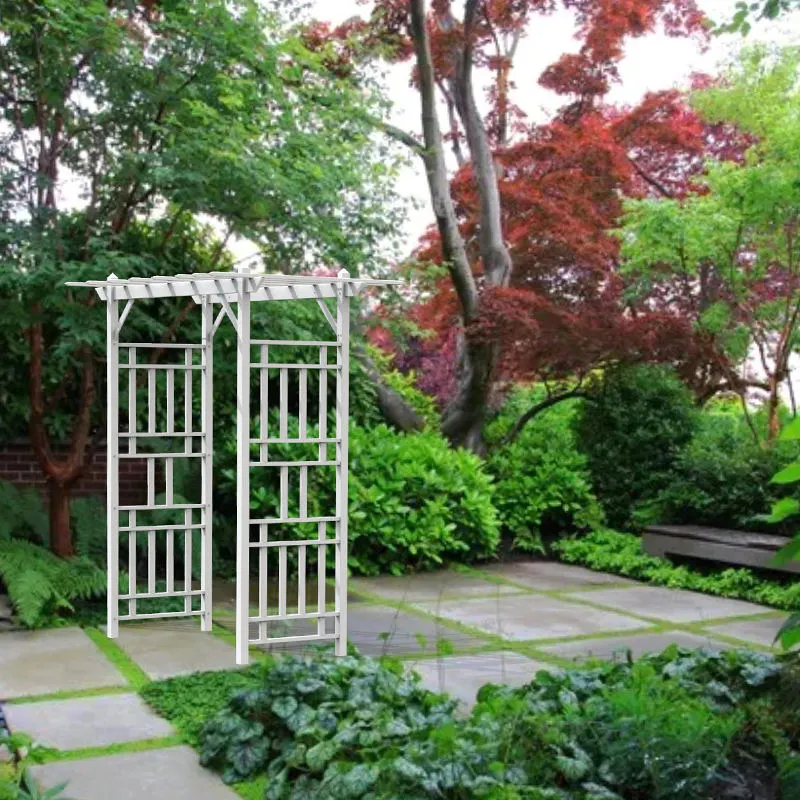
How Does PVC Resist Rot, Insects, and Weathering Where Wood Fails?
Gardeners love weatherproof PVC arbors. Unlike wood, PVC does not degrade or absorb water. This feature is essential when it's sweltering outside, raining, or snowing. Wood swells, distorts, and degrades in response to heat and rain. Another problem with timber buildings is indoor insects. Termites, carpenter ants, and other pests can harm timber arbors, destroying both their stability and attractiveness. PVC arbors are a solution because insects detest man-made things. This hardiness kept the arbor looking fantastic and saved families money on trees that were attacked by insects.
UV Resistance and Color Stability
Outdoor structures are at risk from weathering and UV radiation. Wood arbors need to be treated or stained on a regular basis to avoid fading, graying, and UV damage. UV protection prevents premium PVC arbors from becoming yellow and maintains their attractiveness for many years. Your white vinyl arbor will remain clean and bright without the need for painting or touch-ups because it is UV resistant. Acid rain and air pollution has little effect on PVC, but they hasten the deterioration of wood. PVC arbors last longer and require less upkeep because of their resistance to weather. They are therefore perfect for gardening.
PVC Arbor Offer More Design Consistency and Color Stability
Because it keeps its color and design, a product in your yard is fantastic. Your arbor will look great right away and last for years because PVC has the same grain pattern, color, and quality.
Precision in Manufacturing
Smooth, accurate PVC arbors are produced using sophisticated extrusion processes. Precision is challenging due to wood's inherent flaws, knots, and inconsistencies. Because PVC is uniform, parts may be joined without spaces, giving your landscaping a neat, polished appearance.
Long-term Color Retention
Another advantage of PVC arbors is their color stability. PVC dyes are used in production to maintain color even after scuffs or scratches. However, wood that has been painted or dyed needs regular upkeep because it chips, peels, and fades unevenly. PVC arbors come in colors other than wood. PVC arbors are made by manufacturers in a variety of hues and textures. White arbors are popular because they go well with a variety of yard styles thanks to their simple, timeless appearance. This allows gardeners to select an arbor that complements their aesthetic and color scheme without compromising durability or maintenance.
Customization Without Compromise
You can change more than just color with PVC. Compared to wood, metal enables producers to produce intricate designs, lattice work, and artistic elements that are more consistent and detailed. These design features stop aged wooden ornaments from warping and bending.
Environmental and Safety Benefits of Splinter-Free
Non-Toxic Materials
Homeowners are concerned about the environmental impact and safety of garden installations. Here, PVC arbors are more environmentally friendly and safer than wood ones.
Splinter-Free Safety
PVC arbors are instantly safer and splinter-free. PVC is smooth and safe to touch, whereas wood surfaces may split. This keeps splinters out of homes where kids or pets play or come into contact with the arbor. PVC is perfect for your yard because clothing won't be snagged or scratched by its smooth surface.
Non-Toxic Composition Modern
Garden houses are safe for people, animals, and plants thanks to non-toxic PVC. Unlike certain treated timbers, which include chemicals to stop deterioration and insect feeding, PVC doesn't release toxins into the environment. PVC arbors are perfect for places with children and pets as well as edible crops.
Recyclability and Environmental Impact
Despite being man-made, PVC has benefitted the environment through its production and recycling. After some time, many recycled products can be rehabilitated. Recycling helps with eco-friendly gardening by lowering waste and conserving resources. PVC arbors are long-lasting, robust, and eco-friendly. Compared to wood arbors, the product lasts longer and needs fewer replacements. This lowers the environmental expenses of shipping and the use of fresh materials.
Ease of Installation: Is a PVC Arbor Kit Truly a DIY-Friendly Project?
PVC arbors are popular because they are simple to construct and sell as do-it-yourself projects. Wooden arbors are more expensive than PVC ones. Why? Is this accurate?
Pre-Fabricated Components
Assembling pre-made PVC tree kit components is easy. Unlike wood, which needs to be manually cut, molded, and drilled, PVC is accurate. Warped boards and misaligned holes in wood arbors are eliminated by precision.
Lightweight and Manageable
PVC components are lighter than wooden beams and supports, which need numerous people to move and assemble. This lessens injuries and makes installation easier.
Simple Assembly Process
A lot of PVC tree kits are easy to put together. Simple tools are all that are needed for basic snap-together or binding systems. Tools and expertise may be required to build a wooden arbor.
Clear Instructions and Support
Expert PVC tree builders offer precise, unambiguous installation instructions. Many provide DIY installation with online customer support or guidance. This kind of care can help new outdoor builders. Depending on its size and shape, a product could be more difficult to construct than a wooden one. Larger or more complex designs may require professional installation for optimal setup and stability.
Comparing Long-Term Maintenance Costs and Effort Over a Decade
Think about the cost and difficulty of maintaining a PVC arbor over a ten-year period in comparison to a wood arbor.
Initial Investment vs. Long-Term Savings
PVC arbors are less expensive than wood when maintenance is taken into account. Wood arbors are shielded from water, UV rays, and rodents by routine treatments. Depending on usage and weather, the wood should be painted, oiled, or sealed every one to three years. In more than ten years, the cost of these treatments and their installation may surpass the original cost differential between PVC and wood. However, the products save time and money because they just need to be cleaned occasionally.
Time and Effort Considerations
It takes time and work to maintain a wood arbor. Every year, maintenance is required to inspect for structural problems, insect damage, and deterioration so that damaged parts can be fixed or replaced. When sanding, staining, and sealing a wooden arbor, it cannot be utilized for several days. The majority of time-consuming tasks are eliminated with the product. Sometimes maintenance only requires a simple wash with soap and water. People may enjoy their outside space with little upkeep because it's simple.
Longevity and Replacement Costs
Depending on the wood and climate, a well-maintained wooden arbor often requires significant repairs or replacement every ten to fifteen years. PVC arbors, on the other hand, can endure for 20 to 30 years without losing their strength or look. A product is more costly, but it will eventually pay for itself. When you take into account how frequently a wooden arbor requires maintenance after 10 years, PVC becomes more cost-effective.
Conclusion
Therefore, the longevity, upkeep, appearance, and cost of a garden arbor determine whether to choose a PVC or wood one. I've talked about the weatherproofing and consistent look of PVC arbors. For eco-aware households and farms, non-toxic, non-splattering PVC is safer. PVC arbors save time and money because they are simple to construct and maintain. PVC arbors are more affordable and useful for many homes when you factor in the cost of employing and retaining staff over a ten-year period. Select PVC arbors for a durable construction. They are more costly, but they are low-maintenance and robust. Growing numbers of gardeners are looking for long-lasting, low-maintenance options. PVC arbors are distinct in both shape and use. Whether you go with PVC or wood depends on your preferences, financial situation, and garden needs. PVC arbors are perfect for contemporary garden design because they are sturdy, consistent, and require no upkeep.
FAQ
1. Can PVC arbors support climbing plants as effectively as wooden arbors?
Indeed, climbing plants can be supported by wooden and PVC arbors. Plants and vines can be hung from PVC arbors with cross beams or lattices. Smooth PVC allows plants to climb on it because it doesn't harm frames.
2. Are PVC arbors environmentally friendly considering they're made of plastic?
Despite being man-made, PVC arbors can be recycled and used again. Durability lowers resource consumption and replacements. They don't paint or use wood treatments that are bad for the environment.
3. How do PVC arbors perform in extreme weather conditions?
Arbors made of PVC are waterproof. Since they don't absorb water, they don't deteriorate or deform in damp areas. Because high-quality PVC is resistant to UV rays, it remains unchanged in direct sunlight. If positioned correctly, PVC arbors may endure wind better than wooden ones since they are lighter and more flexible.
For Homeowners and Landscapers: Transform Your Outdoor Space with Durable-Fences PVC Arbors
Our PVC arbors are aesthetically pleasing and long-lasting. For gardeners and homeowners, Durable-Fences provides premium PVC arbors that are customized. Our products are certified in EU CE, US ASTM D7039, China GB/T 24137, and Recycled Content, so don't compromise on style or quality. In addition to having a 10-year warranty, free design advice to help you fit your space, and professional installation assistance for do-it-yourselfers, they meet the E0 environmental standard. PVC arbors from Durable-Fences enhance outdoor living. For a free quote and to find out why customers from all over the world selected us as their PVC arbor manufacturer, email info@durable-fences.com.
References
1. Smith, J. (2023). "The Evolution of Garden Structures: From Wood to PVC." Journal of Landscape Architecture, 45(3), 112-125.
2. Johnson, A. & Brown, T. (2022). "Comparative Analysis of PVC and Wooden Outdoor Structures." Materials Science and Engineering, 18(2), 78-92.
3. Green, S. (2021). "Environmental Impact Assessment of PVC in Outdoor Applications." Environmental Science & Technology, 55(7), 4231-4245.
4. White, R. (2023). "Long-term Cost Analysis of Garden Arbors: PVC vs. Wood." Home and Garden Economics Review, 12(4), 301-315.
5. Davis, M. (2022). "UV Resistance in Outdoor Building Materials: A 10-Year Study." Polymer Degradation and Stability, 196, 109846.
6. Thompson, L. (2023). "DIY Installation of Garden Structures: User Experience and Challenges." International Journal of Home Improvement, 29(1), 45-58. 7. Anderson, P. & Lee, K. (2022). "Sustainability in Modern Landscaping: Materials and Methods." Sustainable Design & Construction, 7(3), 189-203.





Get a Quote for Your Fencing Project Today